Imagine taking a DNA test because you want one simple answer: What country am I really from?
You send your sample and expect something like: Italy, Ireland, Poland, Greece, or Mexico.
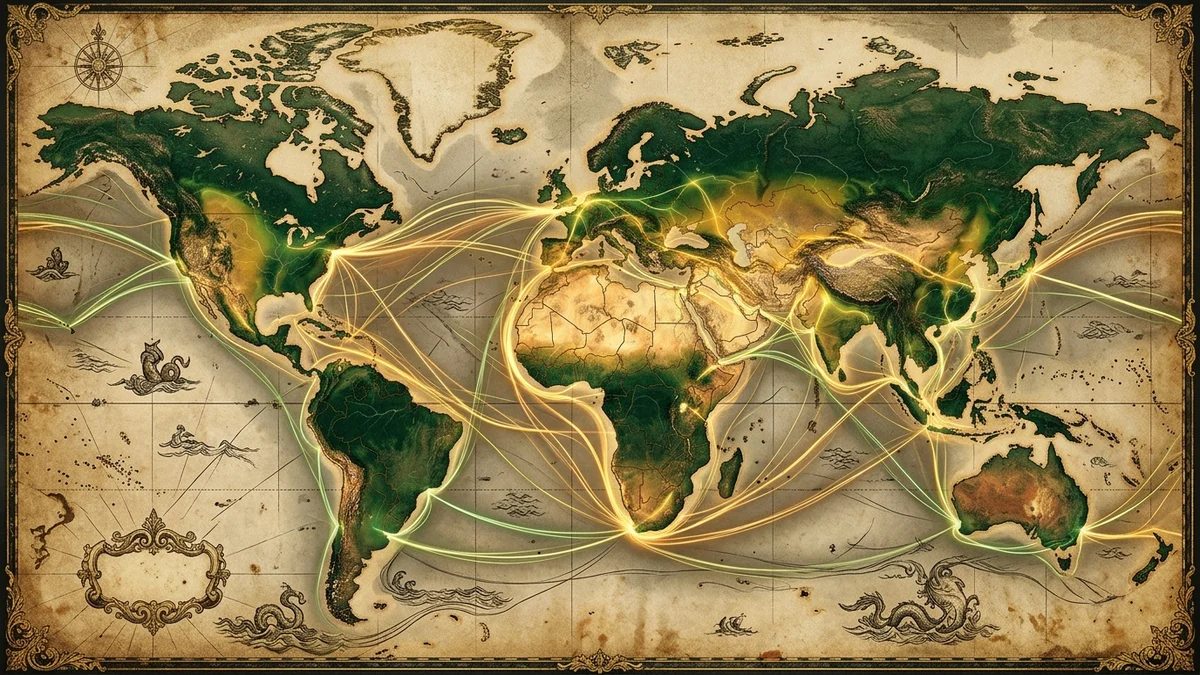
Instead, you receive a map filled with percentages and regions. Maybe it says:
- 37% British & Irish
- 26% Germanic Europe
- 18% Southern Italian
- 11% Greek & Balkan
- 8% Eastern European
Why can't the test simply name your country?
Because DNA ancestry and nationality are not the same thing. DNA can reveal genetic similarities with populations connected to geographic regions. It usually cannot identify your nationality or prove that your family came from one exact modern country.
Can DNA Tell Your Nationality?
No. Nationality usually describes a legal or civic relationship with a country.
You can be Austrian, Canadian, American, French, Mexican, or Australian without having a unique DNA pattern that corresponds to that citizenship. A person can also change nationality during their lifetime. Their DNA does not change when they receive a new passport.
DNA therefore cannot determine citizenship or legal nationality.
What Can Ancestry DNA Tell You?
An ancestry DNA service can compare parts of your genome with reference populations. It may identify similarities associated with broad regions such as:
- British & Irish;
- Southern Italy;
- Scandinavia;
- Eastern Europe;
- Balkans;
- West Africa;
- East Asia;
- Indigenous Americas.
Depending on the testing service and available data, some results can become geographically detailed. But a genetic region should not automatically be interpreted as “You are from this country.” It means your DNA contains patterns statistically similar to the service's reference population associated with that region.
Why Doesn't DNA Follow Country Borders?
Modern political borders are relatively recent compared with human genetic history. Populations moved long before current countries existed. People migrated, traded, married across regions, fled wars, joined empires, crossed borders, and lived in territories that later changed countries.
DNA followed people, not political maps. That is why neighboring populations can share many genetic similarities.
Example: Central Europe
Imagine your ancestors lived for generations in Central Europe. A DNA service might identify similarities connected with Austria, Germany, Czechia, Hungary, Slovenia, Slovakia, and Poland. Historically, people moved throughout this region and political boundaries repeatedly changed. Trying to force every DNA segment into one modern country can therefore create a false impression of precision.
Example: The Balkans
The Balkans provide another clear example. Families from Greece, Albania, North Macedonia, Bulgaria, Serbia, Croatia, Bosnia and Herzegovina, and Montenegro can reflect centuries of migration and population mixing. A DNA service may use broad regional categories because genetic history does not align perfectly with current political boundaries.
Example: Ireland and Britain
Populations across Ireland and Britain have also interacted for centuries. Someone with documented family history in one location may receive ancestry assigned partly to broader neighboring categories. The result is not necessarily contradicting the family tree; it reflects shared population history and limitations in separating closely related groups.
Country, Nationality, Ethnicity and Ancestry Are Different
These terms are often used as though they mean the same thing. They do not.
- Nationality: Usually describes citizenship or formal connection with a country.
- Ancestry: Describes biological or genealogical descent from earlier populations or ancestors.
- Ethnicity: Can include ancestry, culture, language, religion, traditions, community, shared history, and personal identity.
- DNA ancestry estimate: A statistical interpretation of how parts of your DNA compare with selected reference populations.
These concepts can overlap, but they are not interchangeable.
Can DNA Tell What Ethnicity You Are?
DNA can provide evidence about genetic ancestry. It cannot fully determine someone's ethnicity. For example, a person might genetically have ancestors from several regions while culturally identifying strongly with only one community. Culture and identity cannot be measured from DNA alone.
Why Does My DNA List a Country My Family Is Not From?
Several explanations are possible:
- Neighboring populations: Your family's DNA may be similar to reference populations across a modern border.
- Historical borders: Your ancestors' hometown may once have belonged to another state or empire.
- Migration: An older family branch may have moved before the period covered by your known family history.
- Forgotten ancestry: A regional connection may have disappeared from family stories.
- Statistical uncertainty: Particularly small ancestry percentages may change as algorithms improve.
Related: Read our in-depth guide on why an unexpected ethnicity appears in your DNA breakdown.
Can DNA Tell Me the Exact Village My Ancestors Came From?
Usually not from an ethnicity percentage alone. DNA becomes more geographically useful when combined with:
- close DNA matches;
- family trees;
- historical communities;
- surnames;
- immigration records;
- birth certificates;
- church records.
Imagine several close DNA matches all trace one family branch to the same region of Sicily. That evidence can be much more informative than simply seeing “Southern Italian” in an ethnicity chart.
Why Are Some DNA Results More Specific Than Others?
The quality of ancestry estimation depends partly on the available reference data. Some populations may be represented by large datasets, extensive genealogical information, and many tested users. Other regions may have fewer useful samples or substantial genetic overlap with neighboring populations.
This means geographic precision is not equal everywhere. One person might receive a relatively specific subregion, while another may see only Eastern Europe or Broadly Southern European. A broader label is not necessarily a worse test; sometimes broader classification better reflects what the data can confidently support. Learn more about why DNA companies give different ancestry results.
Does 25% Italian Mean One Grandparent Was Italian?
It could be consistent with that family history. But it does not prove it. A simplified genealogical expectation is:
- parent ≈ 50%;
- grandparent ≈ 25%;
- great-grandparent ≈ 12.5%;
- great-great-grandparent ≈ 6.25%.
However, ethnicity estimates are not direct labels attached to specific ancestors. Several branches can contribute DNA associated with the same region, and actual inheritance becomes more variable as you move beyond parents.
Related: Discover the math and genetics behind percentages in what ancestry DNA percentages mean.
Can DNA Tell Which Parent a Country Came From?
Sometimes DNA tools can divide ancestry by parental side. If your Italian ancestry appears almost entirely on Parent 2's side, you can then use known matches or family history to determine whether Parent 2 represents your mother or father.
Testing a parent makes the answer much easier. DNA match groups can also help when parents have not tested.
Related: Read our complete walkthrough on which parent contributed your ancestry.
What If I Just Want to Know What Country I Look Like?
That is a different question. DNA asks: Which populations does my genetic ancestry resemble? A visual ancestry experience asks: Which regional appearance patterns do my facial features resemble?
Neither determines legal nationality. And a face cannot prove biological ancestry. But people are naturally curious about how their appearance is perceived.
If you have ever wondered what nationality do I look like or what ethnicity do I look like, see how our algorithms compare in AI ancestry test vs DNA test.
Discover Which Countries Your Face Visually Resembles
Ancestor Lens analyzes visual characteristics in a photo and explores regional appearance similarities. It does not claim that your face proves DNA ancestry, nationality, ethnicity, or biological identity. Instead, it answers the much more playful question: What countries does my face visually resemble?
DNA Test vs Face Heritage Test
| Question | Better Approach |
|---|---|
| What biological ancestry did I inherit? | DNA test |
| Who are my genetic relatives? | DNA matching |
| What country was my grandfather born in? | Historical records |
| What is my nationality? | Legal / civic records |
| What country do I visually resemble? | Visual face analysis |
| What ethnicity am I culturally? | Personal / family identity |
Different tools answer different questions. The most interesting discoveries often come from combining them.
How to Find the Actual Countries in Your Family History
If your DNA gives you broad regions, genealogy can help narrow them:
- Start with your grandparents: Record full names, birthplaces, dates, and maiden names.
- Ask older relatives: Ask about villages, hometowns, languages, religions, and migration stories.
- Search records: Look for birth certificates, marriage records, censuses, naturalization records, church registers, and find your ancestors' immigration records.
- Examine DNA matches: Find relatives whose family trees extend into the region you are investigating.
- Build one generation at a time: Do not jump from a DNA percentage directly to an ancient origin story. Confirm each connection and build your family tree from scratch.
Frequently Asked Questions
Can a DNA test tell exactly what country I'm from?
Usually no. DNA tests estimate genetic similarities with reference populations, which may correspond to regions spanning one or several modern countries.
Can DNA determine nationality?
No. Nationality is usually a legal or civic status rather than a genetic trait.
Can DNA tell your ethnicity?
DNA can provide evidence about genetic ancestry, but ethnicity also includes culture, community, language, history and identity.
Why does my DNA show several countries?
Your family may have mixed ancestry, neighboring populations may share genetic similarities, and testing companies divide geographic patterns differently.
Can DNA tell where my grandparents were born?
An ethnicity estimate alone cannot establish an exact birthplace. DNA matches combined with family records may help identify specific locations.
Is ancestry DNA more accurate than a face test?
They answer different questions. DNA testing analyzes genetic information. A face ancestry experience analyzes visual resemblance and cannot prove biological ancestry.
Can my face reveal my nationality?
No. Facial appearance cannot establish someone's legal nationality or reliably prove ancestry.
Final Thoughts
A DNA test can tell you a great deal about your genetic ancestry. But it cannot simply read your genome and say: “You are from Country X.”
Human ancestry existed before today's borders. People migrated. Populations mixed. Countries changed. And identity became shaped by much more than genetics.
Think of your DNA result as a map of genetic connections rather than a passport. Then combine that map with your family tree, DNA matches, historical records, surnames, family photographs, and migration history. That is how a broad ancestry region can eventually become a real family story.
Discover What Country Your Face Resembles
Upload a clear front-facing photo and explore your visual heritage results with Ancestor Lens.

