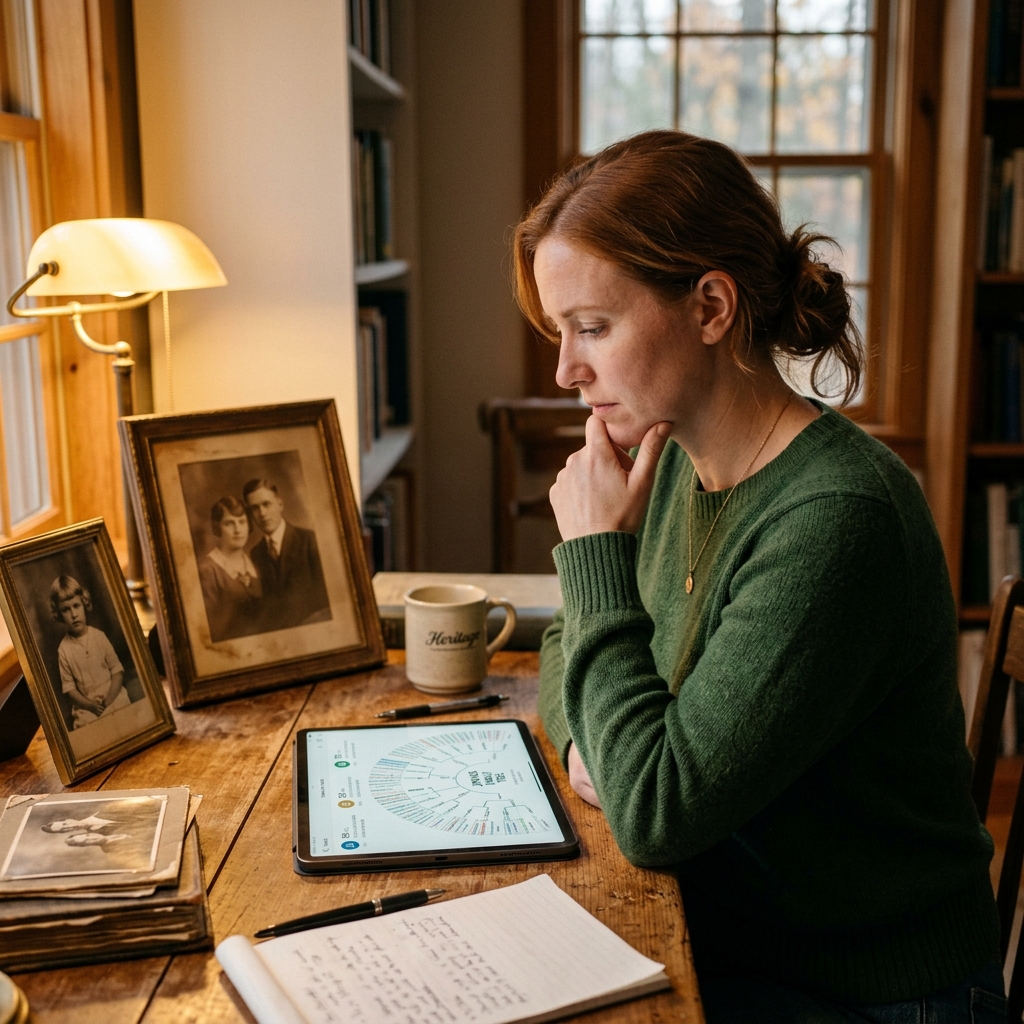
You may not know the name of your biological father or mother.
Perhaps you were adopted, donor-conceived, raised by one parent, or recently received a DNA result showing that the person you expected is not your biological parent.
Finding the truth may feel impossible when the parent has never taken a DNA test.
However, you do not always need a direct parent match. Close cousins, half-siblings, aunts, uncles, and more distant relatives can create a network that points toward the correct family.
The process requires patience, careful documentation, and respect for everyone involved.
Can DNA Identify an Unknown Biological Parent?
DNA testing can provide strong evidence about biological relationships. The easiest result would be a direct match with a biological parent, half-sibling, aunt or uncle, grandparent, or first cousin.
But even without a very close match, several more distant matches may lead to the same ancestral couple. You can then research that couple's descendants and identify people who fit the necessary age, location, family branch, and timeline.
DNA provides the connection. Genealogy and historical records provide the names and story.
Before You Begin
Prepare emotionally for several possible outcomes. You may discover:
- a parent who wants contact;
- a parent who refuses contact;
- a parent who has died;
- half-siblings;
- an adoption;
- donor conception;
- mistaken paternity;
- a family secret;
- incomplete or contradictory records;
- relatives who did not know you existed.
Finding a name does not guarantee a relationship. Decide what you are seeking: medical history, identity information, photographs, cultural background, one conversation, ongoing contact, or confirmation only. Your goal may change during the search.
Step 1: Save Your Original DNA Results
Record the testing company, date of result, match names, shared DNA amounts, predicted relationships, shared matches, family-tree links, messages, and screenshots of important profiles.
Matches can make profiles private, remove trees, change usernames, or stop participating. Keep organized notes from the beginning. Do not publish sensitive information publicly.
Step 2: Separate the Known and Unknown Family Sides
When one parent is known, identify DNA matches connected to that parent. The remaining matches are more likely to belong to the unknown side.
The strongest method is to test the known parent. When that is not possible, use known maternal or paternal cousins, aunts or uncles, half-siblings, grandparents, or documented family matches.
Label all known-side matches first. Do not assume that every unrecognized match belongs to the unknown parent. Some distant relatives from the known side may simply be unfamiliar.
Step 3: Focus on the Closest Unknown Matches
Begin with the people sharing the most DNA. For each close match, record:
- match name;
- shared DNA;
- possible relationships;
- approximate age;
- maternal or paternal;
- shared matches;
- family surnames;
- locations;
- tree available;
- contact status;
- notes.
Do not rely only on the platform's predicted relationship. The same shared-DNA range may fit several possibilities. Use the person's age and family structure to remove impossible options.
For example, someone twenty years younger than you cannot be your biological parent, even if the shared DNA is consistent with several close relationships.
Step 4: Examine Shared Matches
Shared matches are people who match both you and another selected person. They help create family groups.
Imagine that your closest unknown match is Sarah. Sarah shares matches with David, Helen, Mark, and Julia. If these people all descend from the same grandparents or great-grandparents, you have identified a probable ancestral branch.
Repeat the process with several major matches. You may discover two groups representing the two sides of the unknown parent's family.
Step 5: Build Research Trees for Your Matches
A research tree is a temporary family tree created to understand how your DNA matches are related. For each useful match, identify parents, grandparents, great-grandparents, siblings, spouses, locations, and children.
Use public family trees, birth indexes, marriage records, obituaries, cemetery records, newspapers, census records, and social media only where appropriate and lawful.
The goal is to find common ancestors among several matches. Do not copy private personal details into a public tree.
Step 6: Find the Common Ancestral Couple
Suppose three unknown matches descend from different children of the same couple. This suggests that you may also descend from that couple or one of their close relatives.
Now list their children, grandchildren, and later descendants. The unknown biological parent should fit somewhere in that descendant network.
Step 7: Use Age, Place, and Timeline
DNA tells you which family to investigate. Age and location help identify the right person. Ask:
- Who was the correct age when I was conceived?
- Who lived near my birthplace or known parent?
- Who attended the same school, university, military unit, or workplace?
- Who traveled to the relevant city?
- Which descendants were biologically capable of being the parent?
- Was the person married or in another relationship at the time?
- Are there photographs or documents supporting the timeline?
Step 8: Look for Two Independent DNA Lines
A strong identification usually connects you with relatives from both sides of the candidate parent's family. For example, a suspected father has a maternal family branch and a paternal family branch. If you match documented relatives from both branches, the evidence becomes much stronger.
A conclusion based on one distant cousin alone is less reliable. Seek multiple independent matches.
Step 9: Consider Testing Another Relative
When appropriate and consensual, testing a close relative can help confirm the conclusion. Potential testers include the suspected biological parent, a known child of that person, a sibling, an aunt or uncle, a first cousin, or a parent of the suspected person.
Do not secretly test another person's DNA. Explain why you are requesting the test, what it may reveal, what privacy settings are available, that they can decline, and who will access the result.
Step 10: Contact the Person Carefully
A first message should be private, factual, and non-accusatory. For example:
Hello, my name is Emma. I am researching an unknown branch of my biological family. My DNA matches and family-tree research suggest that we may have a close biological connection. I understand that this message may be unexpected, and I do not want to create pressure. I would be grateful to compare basic family information if you feel comfortable.
Avoid public comments, contacting the person's children first, accusations, threats, repeated messages, revealing the story to their workplace, or posting photographs without permission. Give the person time.
What If the Biological Parent Does Not Respond?
Non-response may mean the account is inactive, the person did not see the message, they are shocked, they need time, they fear family conflict, they do not know the truth, they do not want contact, they are ill, they have died, or another person controls the account.
One respectful follow-up may be appropriate. Repeated contact across several platforms is not. You can continue researching through public records and other consenting relatives.
What If the Parent Has Died?
You may still be able to learn through half-siblings, nieces and nephews, cousins, obituaries, photographs, school records, military files, newspapers, cemetery records, and friends or relatives willing to communicate.
A deceased parent can still be identified through DNA matches to their relatives, but every conclusion should be carefully documented.
Protect Privacy
Searching for biological identity is legitimate. Other people also have privacy rights and emotional boundaries. Before sharing the discovery, consider:
- Are minors involved?
- Does the story include assault or coercion?
- Does the match consent to being named?
- Could the conclusion still be wrong?
- Are you revealing someone's reproductive or medical history?
- Does the person have an existing family that does not know?
Tell your own story carefully without exposing another person unnecessarily.
When to Hire a Genetic Genealogist
Professional help may be useful when the closest matches are distant, endogamy affects the results, family members are related in several ways, records are in another language, the ancestry comes from an underrepresented population, the family tree contains adoption or name changes, several candidates fit the timeline, or the discovery has legal consequences.
A professional should explain the evidence and uncertainty, not merely provide a name without documentation.
Can Facial Resemblance Confirm a Biological Parent?
No. A person may strongly resemble someone who is not a close biological relative. A biological child may also look very different from both parents.
Do not use photographs or face-comparison apps to prove parentage. Visual resemblance can be emotionally interesting, but biological relationships require DNA evidence and documented research.
How Ancestor Lens Can Complement the Journey
Ancestor Lens cannot identify or confirm a biological parent. It does not analyze genetic data or establish family relationships.
It can help users explore which regional patterns their face visually resembles, which side of a known family they resemble, similarities between generations, possible heritage themes to research, and imagined historical family portraits.
Use Ancestor Lens for visual heritage exploration. Use DNA matches, records, and appropriate professional support for biological-parent research.
Explore My Visual Origins with Ancestor LensDiscover which countries your facial features visually resemble — no DNA required.
Biological Parent Search Checklist
- ✓ Save the original DNA results
- ✓ Identify the known family side
- ✓ List the closest unknown matches
- ✓ Review shared-match groups
- ✓ Build research trees
- ✓ Find common ancestral couples
- ✓ List descendants
- ✓ Compare ages and locations
- ✓ Look for two independent DNA branches
- ✓ Seek consensual confirmation
- ✓ Contact people privately
- ✓ Document confirmed and uncertain conclusions
Frequently Asked Questions
Can I find my biological father if he has not taken a DNA test?
Potentially. Close or distant relatives from his family may have tested, allowing you to identify a shared ancestral family and research its descendants.
What is the best DNA match for finding an unknown parent?
A parent, half-sibling, aunt, uncle, grandparent, or first cousin is especially useful, but several more distant matches can also solve the question.
How do I know whether a match belongs to my mother's or father's side?
Compare the match with a tested parent or a known relative. Shared matches and documented family trees can help identify the correct side.
Can DNA identify a biological parent with complete certainty?
Very close direct testing can provide strong evidence. Indirect identification through relatives should use multiple matches, family trees, records, ages, locations, and ideally additional confirmation.
Should I contact a suspected biological parent immediately?
First verify the evidence. Then make private, respectful contact that explains the possibility without presenting an unverified accusation as fact.
What if my biological parent refuses contact?
Respect the refusal. You can continue researching through public records and consenting relatives. A genetic genealogist may offer additional options depending on your specific situation.
Is it ethical to search for a biological parent without their knowledge?
Researching through DNA matches and public records is generally considered acceptable. Secretly obtaining another person's DNA sample for testing is not ethical and may be illegal. Contact should always be respectful and allow the other person to decline.
Final Thoughts
Finding an unknown biological parent through DNA is possible for many people, but it requires patience, careful documentation, and respect for everyone involved.
DNA tells you which family to investigate. Age, place, timeline, and records help identify the right person. Multiple independent lines of evidence make the conclusion more reliable.
The process can take weeks or months. Some searches succeed quickly. Others take longer or reveal answers that are difficult to process.
Approach each step carefully. Document what is confirmed and what remains uncertain. Seek support when the emotional weight becomes significant.
Recommended Articles
- 👉 How to Understand DNA Matches: A Beginner's Guide
- 👉 Unexpected DNA Results: What to Do After Discovering a Family Secret
- 👉 How to Find Family Medical History Without Biological Parents
- 👉 How to Build a Family Tree From Scratch
- 👉 Why Do Ancestry DNA Results Differ Between Companies?
Explore Your Visual Origins
Ancestor Lens helps you explore which countries your facial features visually resemble. Upload a photo and start your heritage discovery — no DNA required.

