Quick answer
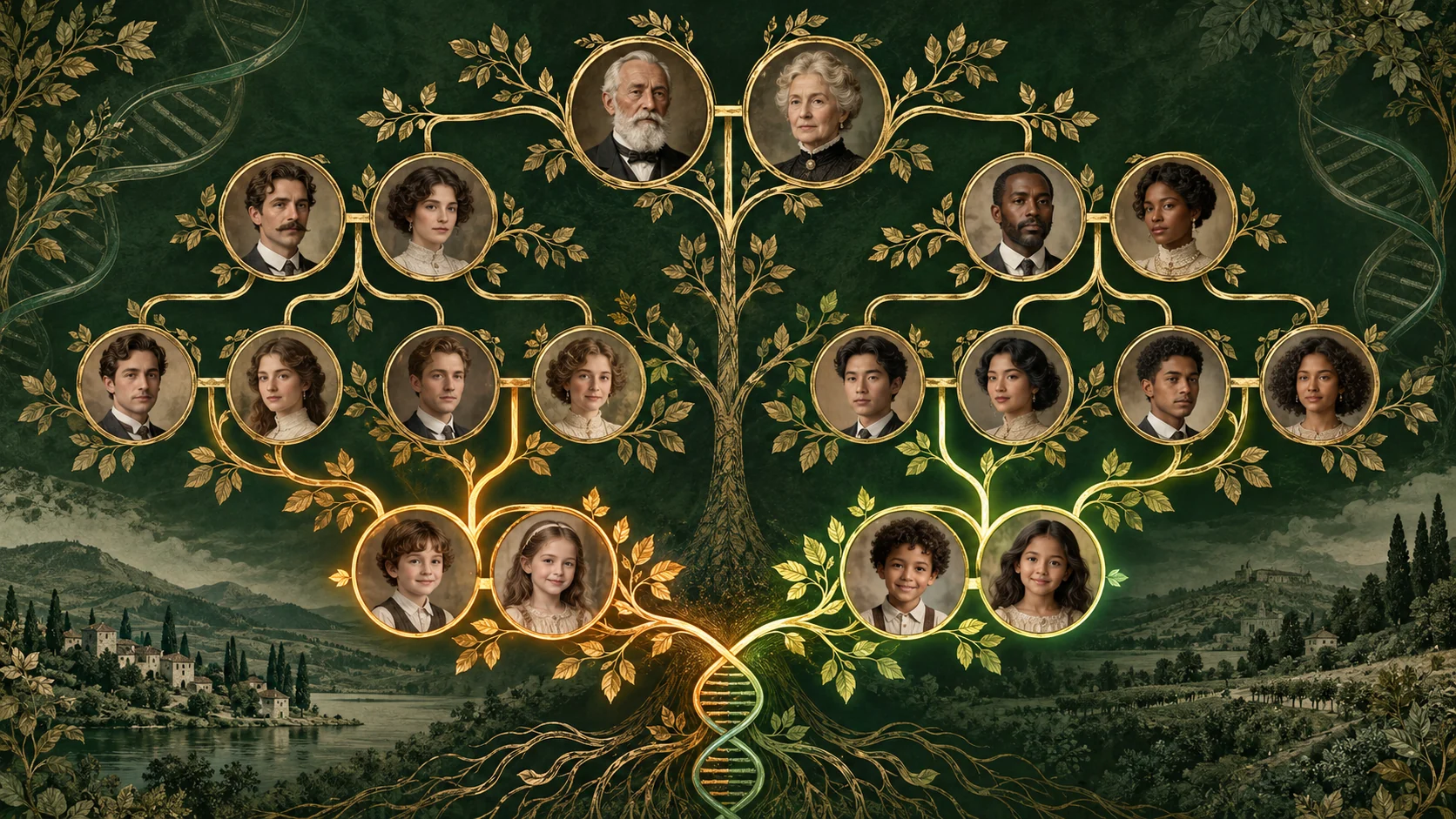
Your second cousin is a person who shares a set of great-grandparents with you. Your parents are first cousins to that person's parents, and you are in the same generation. The child of your second cousin is your second cousin once removed. Your parent's second cousin is also your second cousin once removed.
Cousin relationship chart
| Relationship | Most recent shared ancestors | Generations from each person to ancestors | Average shared autosomal DNA |
|---|---|---|---|
| First cousins | Grandparents | 2 and 2 | About 12.5% |
| Second cousins | Great-grandparents | 3 and 3 | About 3.125% |
| Third cousins | 2× great-grandparents | 4 and 4 | About 0.781% |
| Fourth cousins | 3× great-grandparents | 5 and 5 | About 0.195% |
| First cousins once removed | Grandparents for one; great-grandparents for the other | 2 and 3 | About 6.25% |
| Second cousins once removed | Great-grandparents for one; 2× great-grandparents for the other | 3 and 4 | About 1.563% |
DNA percentages in the table are inheritance averages, not promises. Recombination creates a range, and more than one genealogical relationship can produce similar amounts of shared DNA. Use the family tree to name the relationship and DNA as supporting evidence.
How to calculate any cousin relationship
Begin with the most recent common ancestor shared by both people. For full cousins, this is usually an ancestral couple. Then count the generations from each person back to those ancestors.
- Find the nearest shared ancestor or ancestral couple.
- Count generations from Person A to the shared ancestor.
- Count generations from Person B to the same ancestor.
- Subtract one from the smaller generation count. That number is the cousin degree.
- The difference between the two generation counts is the number of times removed.
Example: both people are three generations from the same great-grandparents. Three minus one equals two, so they are second cousins. The generation counts are equal, so there is no removal.
The “greats plus one” shortcut
When both people are in the same generation, count the “greats” in the shared ancestor's title and add one. Shared grandparents: zero greats, so first cousins. Shared great-grandparents: one great, so second cousins. Shared 2× great-grandparents: two greats, so third cousins.
What does “once removed” mean?
Removed describes a difference in generations between two relatives. Once removed means one generation apart; twice removed means two generations apart. It does not change which ancestral branch connects the cousins.
First cousin once removed
Your first cousin's child is your first cousin once removed. Your parent's first cousin is also your first cousin once removed. In both cases, the shared grandparents for one person are great-grandparents for the other.
Second cousin once removed
Your second cousin's child is your second cousin once removed. Your parent's second cousin is also your second cousin once removed. The relatives descend from the same great-grandparents, but one person is one generation farther away.
First cousin twice removed
Your first cousin's grandchild is your first cousin twice removed. A grandparent's first cousin is another example. The cousin degree stays first because the closer person is two generations from the shared ancestor; the two-generation difference creates “twice removed.”
Second cousin vs first cousin once removed
These relationships are commonly confused. Second cousins are in the same generation and share great-grandparents. First cousins once removed are one generation apart and connect through grandparents for one person and great-grandparents for the other.
- Your parent's cousin's child: your second cousin.
- Your parent's cousin: your first cousin once removed.
- Your cousin's child: your first cousin once removed.
- Your cousin's grandchild: your first cousin twice removed.
What are half cousins?
Full cousins usually share an ancestral couple. Half cousins share only one ancestor at that level because the connecting siblings were half siblings. For example, if your grandparent and another person's grandparent shared a father but had different mothers, you and that person may be half first cousins.
Half relationships generally share less DNA on average than corresponding full relationships, but the ranges can overlap. Records of marriages, prior partners and children are essential for distinguishing a half relationship from a full one.
What are double cousins?
Double cousins share two sets of ancestors because two siblings from one family had children with two siblings from another family. Double first cousins can share more DNA than ordinary first cousins. This is one reason a shared-DNA amount should not be converted into one relationship without studying the family structure.
How much DNA do second cousins share?
Second cousins share about 3.125% of autosomal DNA on average, but the actual amount varies. The total is often reported in centimorgans, a measure of genetic linkage. A single centimorgan total can fit several possible relationships, especially beyond close family.
To evaluate a possible second cousin:
- Check the total shared DNA and number of segments.
- Identify shared matches who belong to the same family branch.
- Build both trees back to the proposed great-grandparents.
- Check whether half, removed, double or endogamous relationships are possible.
- Confirm the paper trail with original records.
A genealogical second cousin may occasionally share much less DNA than expected, particularly as relationships grow more distant. If a match does not fit the proposed label, examine alternative tree paths before assuming the test is wrong. Learn more in our guide to understanding DNA matches.
Worked cousin relationship examples
Example 1: two people share great-grandparents
Anna's grandmother and Leo's grandfather were siblings. Anna and Leo each sit three generations below the same ancestral couple. They are second cousins.
Example 2: your mother's cousin
Your mother and Maya share grandparents, so they are first cousins. You are one generation below your mother. Maya is your first cousin once removed.
Example 3: your second cousin's daughter
You and Daniel share great-grandparents, so you are second cousins. Daniel's daughter is one generation below him. She is your second cousin once removed.
Example 4: a match shares only one great-grandparent
If your grandparent and the match's grandparent were half siblings, you share one great-grandparent rather than a couple. The genealogical label is half second cousin.
How to add cousin relationships to a family tree
Enter each person through their direct parent-child links. Avoid attaching someone merely as “second cousin” without documenting the connecting generations. When the shared ancestors are correctly entered, genealogy software can calculate the relationship automatically.
If the family connection is uncertain, keep the proposed relationship in research notes and record the evidence for and against it. Our family-tree guide explains how to cite each link.
Frequently asked questions
Are second cousins blood related?
Yes. Full second cousins descend from the same great-grandparents. They usually share some autosomal DNA, although the exact amount varies.
What is my parent's cousin to me?
Your parent's first cousin is your first cousin once removed. Your parent's second cousin is your second cousin once removed.
What is my cousin's child to me?
Your first cousin's child is your first cousin once removed. The cousin degree stays the same, while the one-generation difference creates “once removed.”
Do second cousins have the same grandparents?
No. First cousins share grandparents. Second cousins share great-grandparents, so their grandparents are usually siblings.
Can a DNA test prove someone is my second cousin?
DNA can support the relationship, but shared-DNA ranges overlap with other relationships. Use shared matches, ages and documented family trees to distinguish the possibilities.
Sources and further reading
- FamilySearch: What is a second cousin?
- FamilySearch: Family relationship chart
- FamilySearch: Understanding centimorgans in DNA results
DNA percentages are averages. Relationship conclusions should combine genetic results with documentary research.

